
Hadestown: Teen Edition
Stars Performing Arts
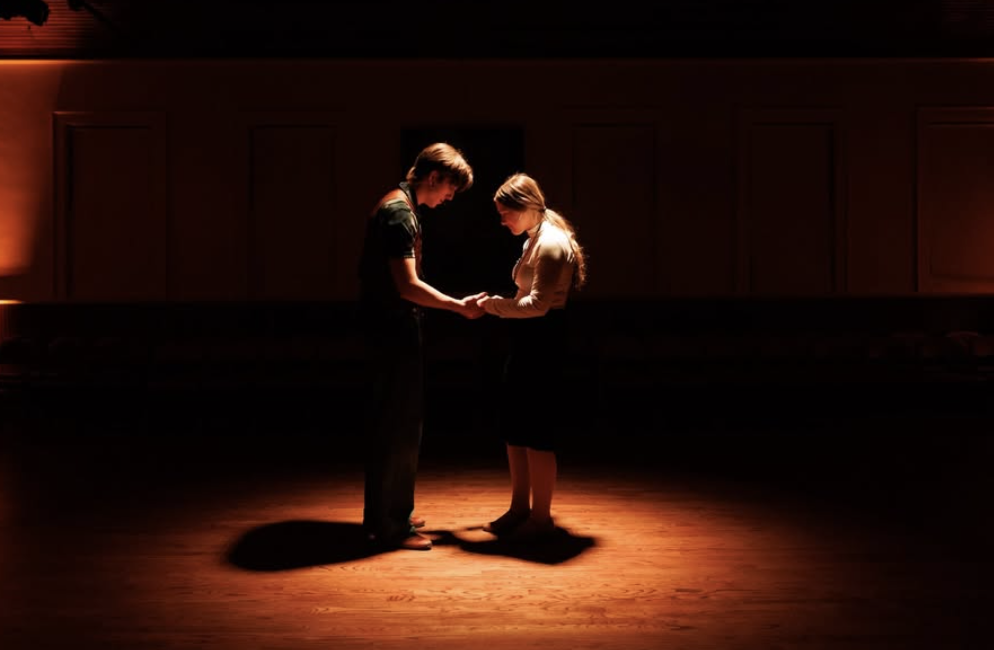
Photo credits: @meech_creative_llc on Instagram
When you hear “Hadestown,” what comes to mind?
Steampunk goggles? Rustic ambience?
Try the fluorescent glare of a corporate office. Suddenly, this “old song” doesn’t seem so old.
Hadestown: Teen Edition at Stars Performing Arts is unlike any other iteration you’ve seen before; and it’s incredibly refreshing. Listen--I’ll be a fan of the show until the day I die, but even I’ll admit: seeing the same copy-paste productions Hadestown: Teen Edition has grown trite. Each show has its fantastic stand-out moments, but on the whole it ultimately feels like clockwork.
This production made me view the show in new ways I’d never considered before.
But in order to break it down, let’s first go through a bit of Hadestown’s original concept and plot.
Hadestown
I was today years old when I realized I hadn’t given any history about Hadestown in my review of the fantastic production at Fairfax High School. Major shame on me.
Let’s fix that right now!
Anaïs Mitchell originally wrote Hadestown back in 2006 as a small, DIY community theatre project in Vermont. Since then, the show has developed and taken on many different forms--including a concept album--before making it to Broadway. The history is fascinating and complex; I highly recommend watching the YouTube documentary-style breakdown by Waiting in the Wings for the in-depth of it all.
Also, if you’re like me and love exploring the meaning behind literally every single lyric, check out Anaïs Mitchell’s book Working on a Song: The Lyrics of Hadestown. She goes into some fascinating stuff about not only her own lyrics, but about musical theatre librettos in general.
Anyhoo, Hadestown follows two fairly-known Greek myths: that of Persephone and Hades, and Orpheus and Eurydice. Typically, the show takes place in a rustic setting, and plays off a sense of dichotomy: the lively world above the ground, versus the artificial underworld of Hadestown.
Now…
The Concept
Instead of being set in earlier ages, director Sierra Lockrem catapulted this timeless myth into the modern world. The world above ground is filled with joyous bohemians: artists who strum instruments, sing with one another, and don earthy colors. Orpheus was a street busker, and Eurydice was a freelance artist.
Hadestown, however, was the corporate world. Bathed in fluorescent light, every worker wore black-and-white clothing and moved in mechanical synchrony. Everyone was expressionless, except for Hades: a greedy CEO who delighted in the empire he’d created. Persephone was his trophy wife, while Hermes was the company janitor: a link between both worlds.
As one might imagine, this recontextualization paved the way for new interpretations of iconic numbers. I won’t spoil the intricacies, but “Wait for Me” was particularly refreshing.
In fact, I was hooked from the moment the show opened. After his classic “Alright? Alright!” call-and-response, Hermes dropped the needle on a record player. Once the record started spinning, we jumped into “Road to Hell” and the rest of the show. I thought it was a genius way to modernize the show from the get-go; what other way would we now be listening to this old song, than through a record? (And, yes, seeing Hermes take out his phone and open up Spotify wouldn’t be the same).
Now, before getting into individual performances, I’d like to take a second to admire the production’s outstanding technical elements.
Technical Elements
The Great Falls Grange is a small, intimate space; not unlike the type of venue where Hadestown began. What made this show particularly effective was its immersion: almost everything took place on the same level as the audience, while the band sat on the stage above. Because of this, the show had minimal set: a few tables and props, at most. At first, I was worried the small space would minimize the show’s typical “wow” factor.
Then, the show started, and I saw the lights.
(Henceforth, my ode to William Waugh and his lighting).
William Waugh’s lights bathed the Grange in color, practically transforming the room with each shift. While the show began in lush green and earthy orange tones, the office lights of Hadestown cast chilling fluorescents over the audience. Color itself told so much of the story: green for moments of life (“Livin’ it Up on Top”), orange for moments Orpheus inspired hope (“If It’s True”), hot pink for moments of love (“All I’ve Ever Known”), and, of course, fluorescence for Hadestown (“Why We Build the Wall”)--to name a few.
In fact, Waugh actually built, wired, and installed LED bars—reminiscent of the fluorescents you’d find in any office building—to run along the ceiling of the Grange. They not only flickered upon the introduction of Hadestown, but stayed lit for all of intermission, immersing the audience right into the atmosphere of the office before Act 2.
I really wish I was more of a lighting guru, so I had the language to point out the insanely in-depth nuances of why Waugh’s lighting was so effective. All I can say with certainty is that it was key to the emotional immersion of the experience.
(If you’re smart with lights hit me up and let’s see a show together).
Ella Newman’s choreography further brought the atmosphere to life, from the joyously messy celebration of Bohemia to the mechanized automatons of the corporate world. The assembly line-esque movements of “Chant,” in particular, fit perfectly with the setting of this production. Plus, not once did I miss the classic Hadestown turntable: so many elements were spinning at one point or another (umbrellas, wheeled tables, actors) that provided a nod to the production’s original revolving concept.
I also wanted to shout out Luray McCowan and Jack Lockrem on sound, who had clearly worked with music director Brigid Smullen to skillfully highlight the work of the ensemble; to my delight, their harmonies were clean across the board. The Fates, in particular, had an extremely balanced blend. Accompanying them was the all-ages band, who fit right into the atmosphere of Hadestown. Each member even wore a little red flower to match!
Performances
With an “Alright?” and a crooked smile, Daniel Qiu kicked off the show as Hermes. I’m always excited to see new interpretations of Hermes, since there are so many directions a performer might take the role: in this case, Qiu crafted Hermes to be an effortlessly all-knowing presence. When he wasn’t looming in the shadows, he crooned jazzy riffs in songs like “Road to Hell” with ease. Equally as effortless were Audrey Shifflett, Sofia Colon, and Isha Kargbo as the Fates. I’ve already mentioned their impeccable blend and harmony, but all three were incredibly tuned to one another: in vocals, demeanor, and expression.
Jonas Ethington was Orpheus, and portrayed the boy with a bright-eyed and bushy-tailed sense of naïveté. His performance of “Epic III” was a particular standout: it was powerful in its delicacy, and truly solidified Orpheus’s love for Eurydice. Essentially, I spent the whole show wanting to give Orpheus a hug, which is when you know you’ve done the role well. Opposite Ethington was Meghan Bernet’s Eurydice, who complemented his bold naïveté with flirty skepticism. By the time it came to “Wait for Me (Reprise),” Eurydice’s trust in Orpheus was unmistakable as Bernet unleashed a gut-wrenching belt on the song’s final notes.
Working in parallel to the young lovers were Daniel Plummer and Page Vogel as Hades and Persephone, respectively. Plummer’s portrayal of Hades was maniacally power-hungry, with a gravelly voice that gave songs like “His Kiss, the Riot” an impressive edge to their lower notes. Vogel, meanwhile, brought a poised cheekiness to her role of Persephone, and infused “Livin’ it Up on Top” with an infectious bluesy quality. It was moving to watch the two transform over the course of the production, and rediscover a relationship worthy of rooting for.
Finally, who could forget the backbone of Hadestown: its ensemble? Every performer was dynamic from the moment they stepped onstage. One of my favorite parts of this production took place before it even began; about half an hour before 7pm, cast members began entering the stage and performing songs on guitar, piano, and even cello for one another. They’d dance, sing along, play cards, and engage in merry harmony. Coupled with the lights, I could basically envision the bustling atmosphere of Central Park.
With this initial warm energy came an eerie contrast during “Chant,” when the ensemble entered in stone-cold expression and demeanor.
Speaking of which, shout out to the stage crew for effortlessly navigating this show’s quick changes! They were certainly large-scale, since each quick change involved the whole ensemble. Set changes were equally speedy, which was especially impressive considering the Grange’s lack of proper wing space.
Who is it for?
This production was like a lovechild of Severance and Hair: two completely different pieces of media. Chances are, if either intrigues you--or you’re just a Hadestown lover like I am--you’ll enjoy this production.
Appropriate for the whole family, it invokes a sense of political commentary relevant to today’s society.
Also, if you’ve stuck with me for this long and are still reading, kudos to you! There was so much I was giddy to explain about the concept, and so many shout outs to make. So, here’s a gold star from getting through the longest TTOTS review yet! ⭐
Stars Performing Arts runs Hadestown: Teen Edition at the Great Falls Grange for two more sold-out shows this weekend… but keep your eyes open. They might be singing this old song again sooner than you think.
Visit theatrestars.org for tickets, summer opportunities, and additional information.